Why ERP Projects Fail, and How CyberPower Rescued Its Dynamics 365 Implementation
Most ERP programs don’t fail in one dramatic moment. They drift. Here’s what the research says about why, and how one stalled Dynamics 365 project was rescued.
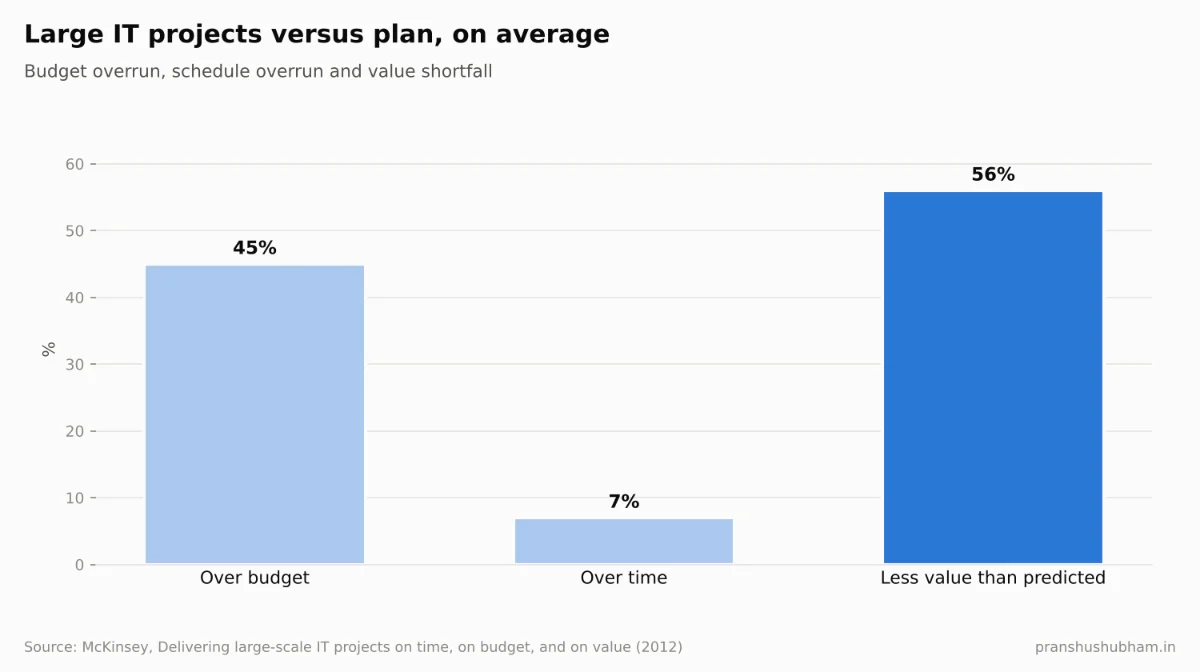
Large IT projects versus plan chart
No one starts an ERP program expecting it to fail. Yet the numbers are sobering.
Gartner predicts that by 2027, more than 70% of recently implemented ERP initiatives will fail to fully meet their original business goals. Speaking to The Register in November 2025, a Gartner analyst added that around 25% fail catastrophically.
Panorama Consulting’s 2026 ERP report found that more than a quarter of organizations went over budget and almost a quarter went over schedule. The top cause of schedule overruns wasn’t technology. It was organizational issues.
The pattern isn’t new. McKinsey’s landmark study of large IT projects found that, on average, they run 45% over budget and 7% over time, while delivering 56% less value than predicted. That research is from 2012, but anyone who has worked on ERP recognizes the shape.
Why ERP programs fail
From the research and my own experience, failures usually come from the same handful of causes:
- Unclear scope. Requirements keep growing because no one owns the “no.”
- Too much customization. Every gap becomes code, and the build never ends.
- Weak governance. Decisions wait for meetings, and meetings wait for people.
- Data left too late. Migration starts weeks before go-live instead of months.
- The people side ignored. Users meet the system for the first time in training.
- Testing squeezed. When the build runs late, testing is what gets cut.
Case study: CyberPower Systems’ rescue
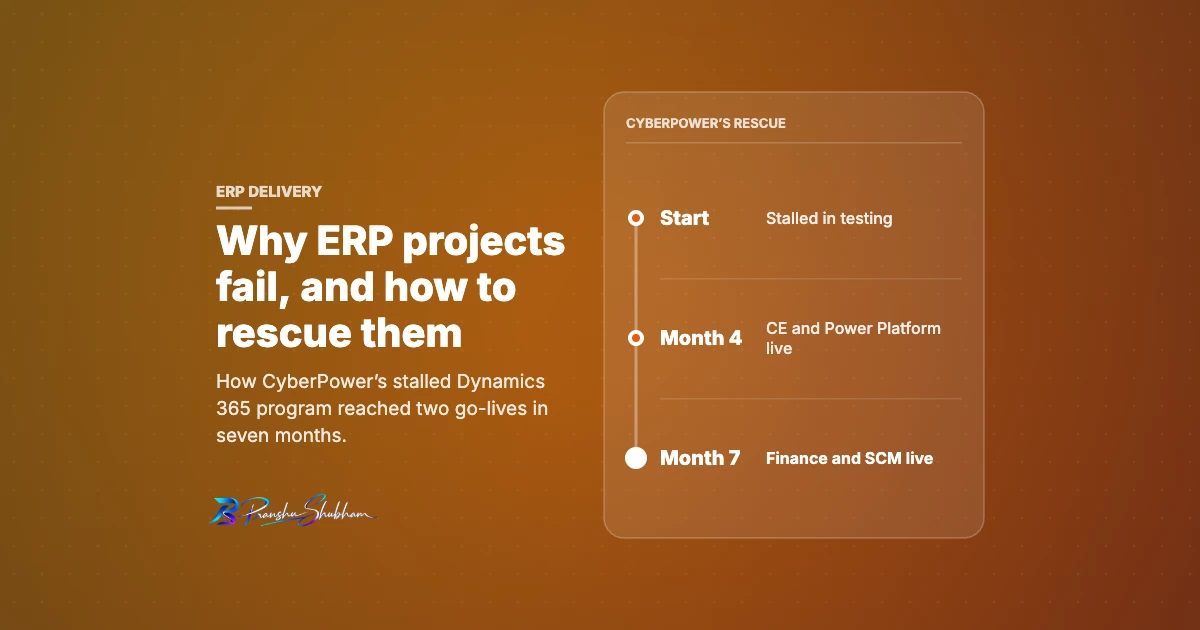
CyberPower Systems, a maker and distributor of power protection products, started its Dynamics 365 journey with a first partner. According to partner MCA Connect’s published story, that project “never made it past testing” and milestones were missed.
MCA Connect assessed the project, built a recovery plan and restarted delivery in two phases:
- Dynamics 365 Customer Engagement and Power Platform were implemented in just four months
- Dynamics 365 Finance and Supply Chain Management, including warehouse management and landed cost, followed only three months later
- Both go-lives were seamless, with no disruptions to operations
Seven months from rescue to two successful go-lives shows that a stalled project can be saved, if the recovery starts with an honest assessment rather than more of the same.
How to rescue a struggling ERP program
1. Stop and assess. Spend two to four weeks on an independent review of scope, design, build quality, data and team.
2. Reset scope to what’s essential. Separate “must have for go-live” from “nice to have later.”
3. Phase the delivery. CyberPower’s two-phase approach reduced risk and gave the business an early win.
4. Fix governance. One decision-maker per area, and a weekly steering committee that actually decides.
5. Rebuild trust with users. Bring super users back into design reviews and testing.
Early warning signs
- Design documents still changing during build
- Test cycles repeatedly postponed
- Data migration “starting next sprint” for months
- The same issues on the risk log every week
- Business users absent from project meetings
FAQ
What percentage of ERP implementations fail? It depends on the definition. Gartner predicts more than 70% will fail to fully meet their original business goals by 2027, with around 25% failing catastrophically.
Can a failed ERP project be rescued? Yes. CyberPower Systems’ stalled Dynamics 365 project was reassessed and delivered in two phases over seven months, with no disruption to operations at either go-live.
The takeaway
ERP programs rarely fail because of software. They fail because of scope, governance and people. Catch the warning signs early, and even a stalled project can still go live successfully.
I’m Pranshu Shubham, a PMP-certified D365 F&O Solution Architect. If your Dynamics 365 program is drifting, get in touch for an independent review.
Keep learning on this site
- Statement of work (SOW) template and example for IT projects
- Requirements traceability matrix template (Excel)
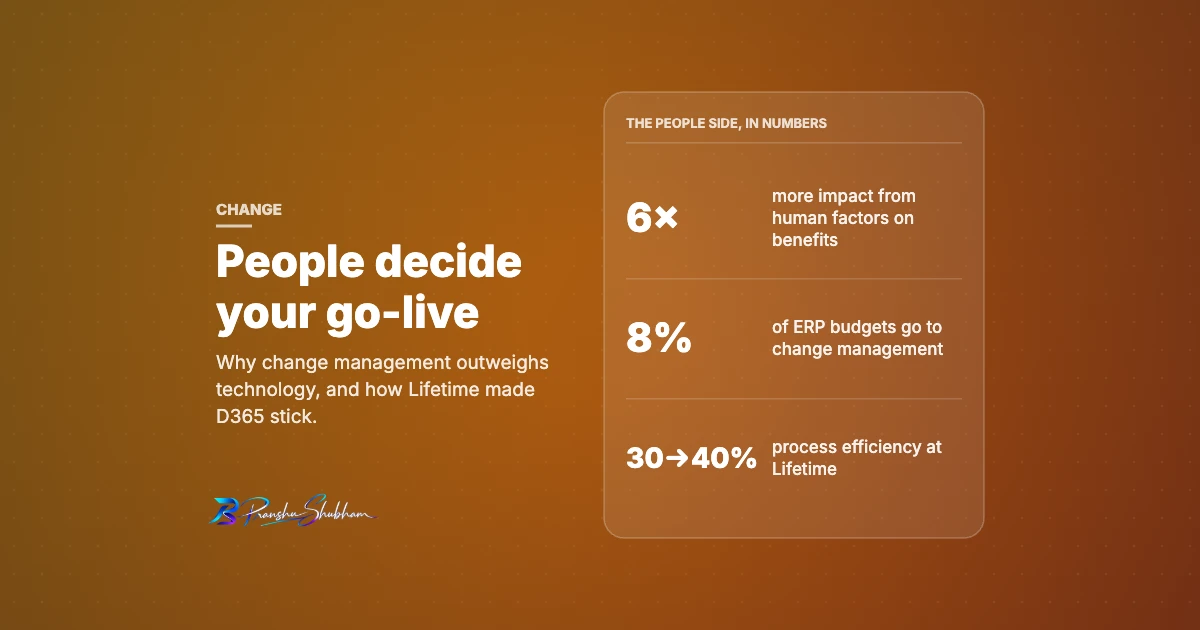
- ERP Change Management: Why People, Not Technology, Decide Your D365 Go-Live
- Why ERP Projects Fail (free resource)
- Risk Management for IT Projects: The RAID Log in Practice (free resource)
- ERP Implementation Playbook: From Discovery to Hypercare (course)