Supply Chain Resilience in the Tariff Era: Plan for Scenarios, Not a Single Forecast
Tariffs, conflict and weather keep rewriting supply plans. The companies that cope best plan for several scenarios, not one forecast. Here's the data, and a real example.
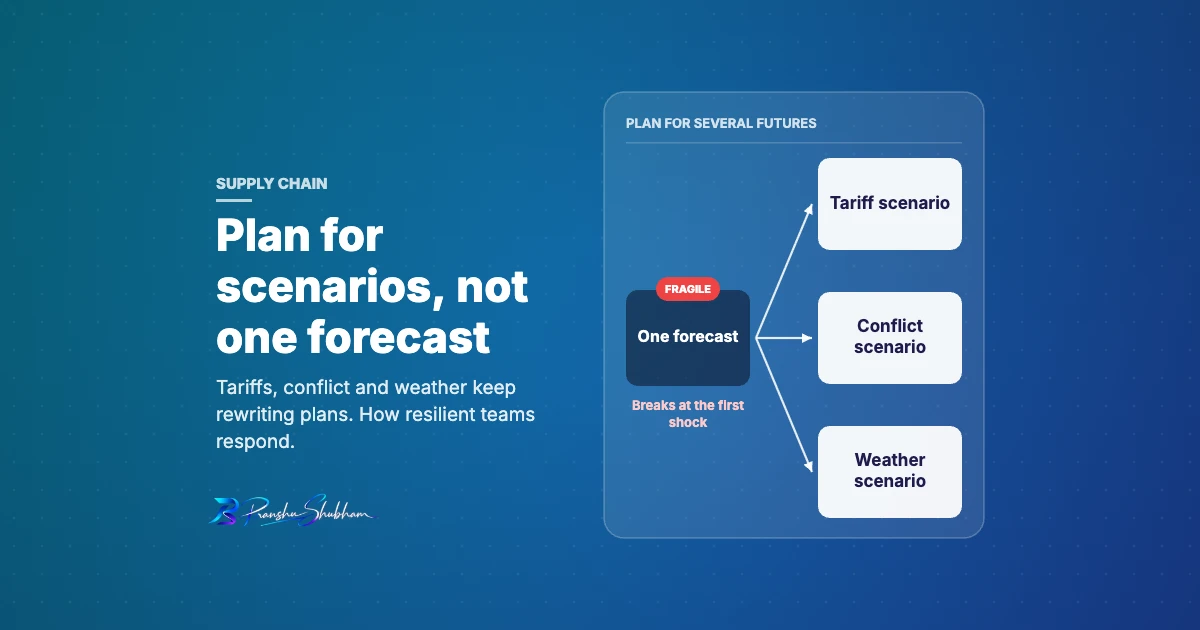
For most of the 2010s, supply chain planning meant producing one good forecast. The last few years have made that approach look fragile. A pandemic, shipping crises, conflicts and, in 2025 and 2026, waves of new tariffs have shown that the single "most likely" plan is rarely the one that happens.
McKinsey's 2025 Supply Chain Risk Pulse found that 82% of companies say their supply chains are affected by new tariffs. McKinsey's 2024 survey found that nine in ten respondents faced supply chain challenges that year, and it took an average of two weeks to plan and execute a response to a disruption.
What leaders are doing about tariffs
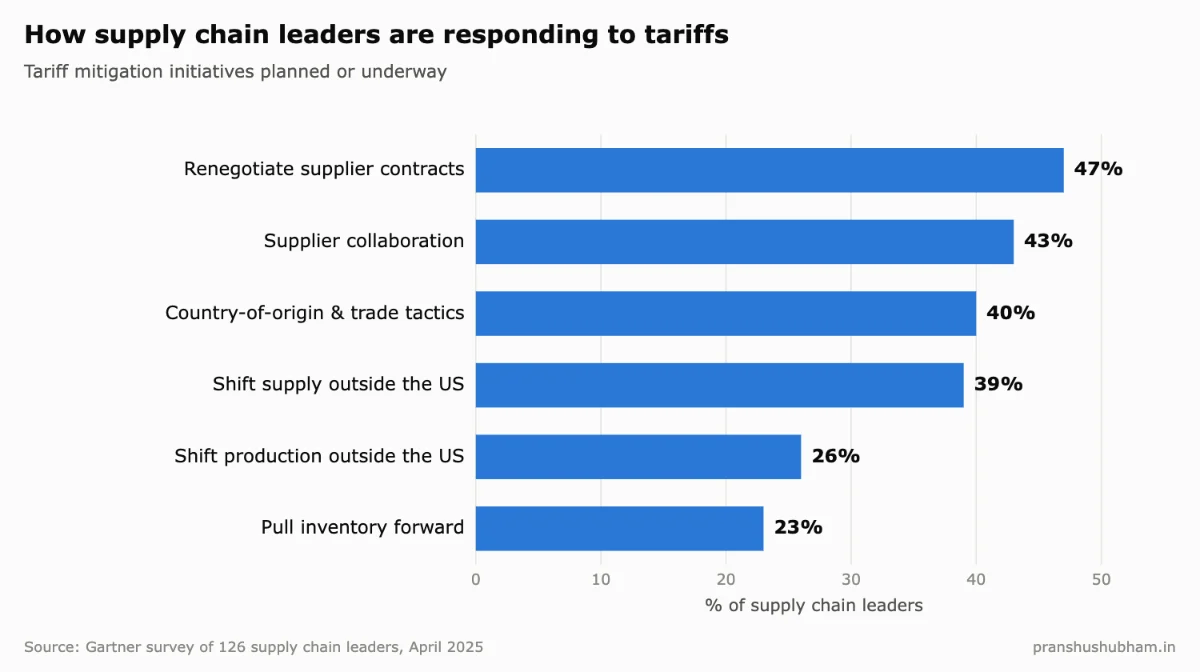
Gartner surveyed 126 supply chain leaders in 2025. 92% cited increased costs as the top tariff risk, and 45% plan to pass costs on to customers. The mitigation initiatives planned or underway:
- Renegotiating supplier contracts: 47%
- Supplier collaboration: 43%
- Country-of-origin and trade tactics: 40%
- Shifting supply locations outside the US: 39%
- Shifting production outside the US: 26%
- Pulling inventory forward: 23%
There's a worrying counter-trend, too. McKinsey's 2025 pulse found that the share of companies planning major digital supply chain investments fell from 47% to 25%, and only 19% deploy AI tools at scale. Under cost pressure, many are cutting the very capabilities that help them respond faster.
Case study: Domino's Pizza UK & Ireland
Domino's Pizza UK & Ireland supplies its stores from four distribution centers. Planners used to forecast in hundreds of spreadsheets, with a high risk of error and no easy way to model disruption.
The company moved to demand planning in Dynamics 365 Supply Chain Management, using machine-learning forecasts with planner adjustments. Planners can run what-if scenarios for events that change demand overnight, such as storms or big football matches.
According to Microsoft's published customer story (2023):
- Forecast accuracy improved by 72%
- Plans are developed and approved in hours instead of days
Domino's disruptions are weather and sport rather than tariffs, but the principle is the same: when the plan can be re-run in hours, a disruption becomes a planning exercise instead of a crisis.
Five practices for a resilient supply chain
1. Plan in scenarios. Keep a base plan plus two or three alternatives, such as a tariff increase, a supplier outage or a demand spike, and know what each one means for stock and cost.
2. Shorten the replanning cycle. If it takes two weeks to respond to a disruption, aim for days. Machine-learning forecasts and automated master planning make that possible.
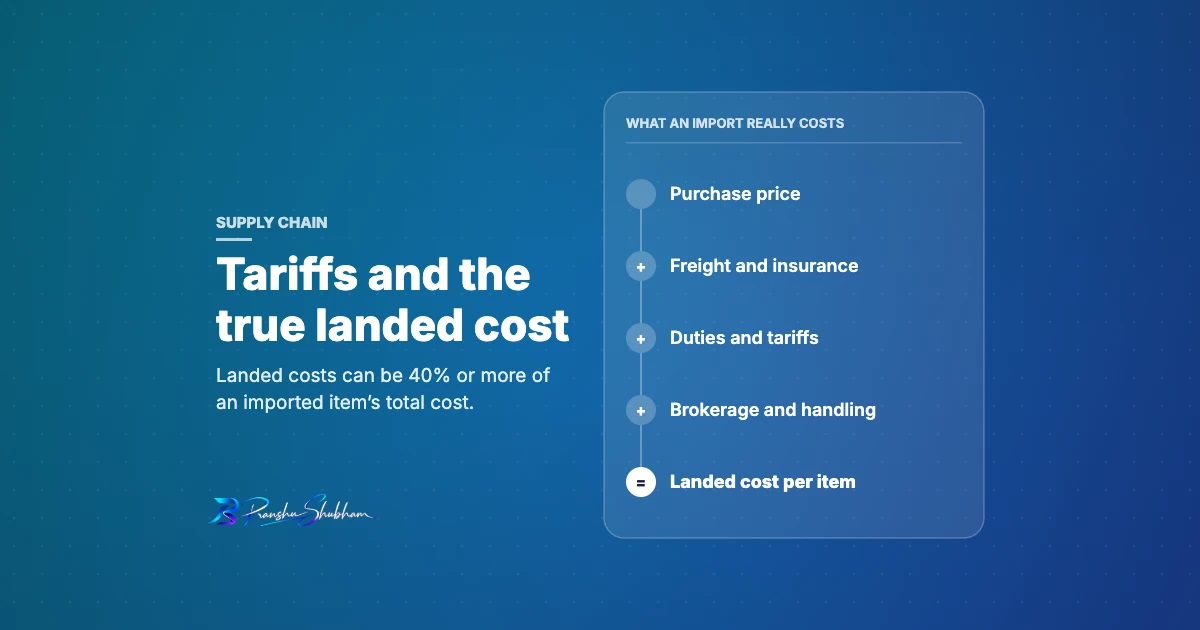
3. Know your true landed cost by origin. Sourcing decisions under tariffs depend on it. (See my post on landed cost in Dynamics 365.)
4. Map suppliers beyond tier one. McKinsey found most companies lack visibility past their direct suppliers. Start with your most critical components.
5. Protect digital investment. The companies cutting planning tools now will be slower next time. Fund the capabilities that shorten response time.
Frequently asked questions
What is supply chain resilience? It's the ability to anticipate, absorb and recover from disruptions, such as tariffs, supplier failures or demand shocks, while still serving customers at an acceptable cost.
Can Dynamics 365 do scenario planning? Yes. Demand planning in Dynamics 365 Supply Chain Management supports machine-learning forecasts, planner adjustments and what-if scenarios, as Domino's UK & Ireland uses.
The takeaway
You can't predict the next tariff, storm or conflict. You can make sure your team can re-plan in hours instead of weeks. That's what resilience looks like in practice.
I'm Pranshu Shubham, a D365 F&O Solution Architect specializing in supply chain. If you want faster, scenario-based planning in Dynamics 365, get in touch.
Keep learning on this site
- From five hours to 15 minutes: Planning Optimization in practice
- Master planning and Planning Optimization in D365 SCM (free e-book)
- Tariffs and landed cost in Dynamics 365
- Dynamics 365 Supply Chain Management Deep Dive (course)