Tariffs and Landed Cost: How Dynamics 365 Shows What Your Imports Really Cost
Landed costs can be 40% or more of an imported item's total cost. With tariffs reshaping supply chains, here's how Dynamics 365 helps you see the true number.
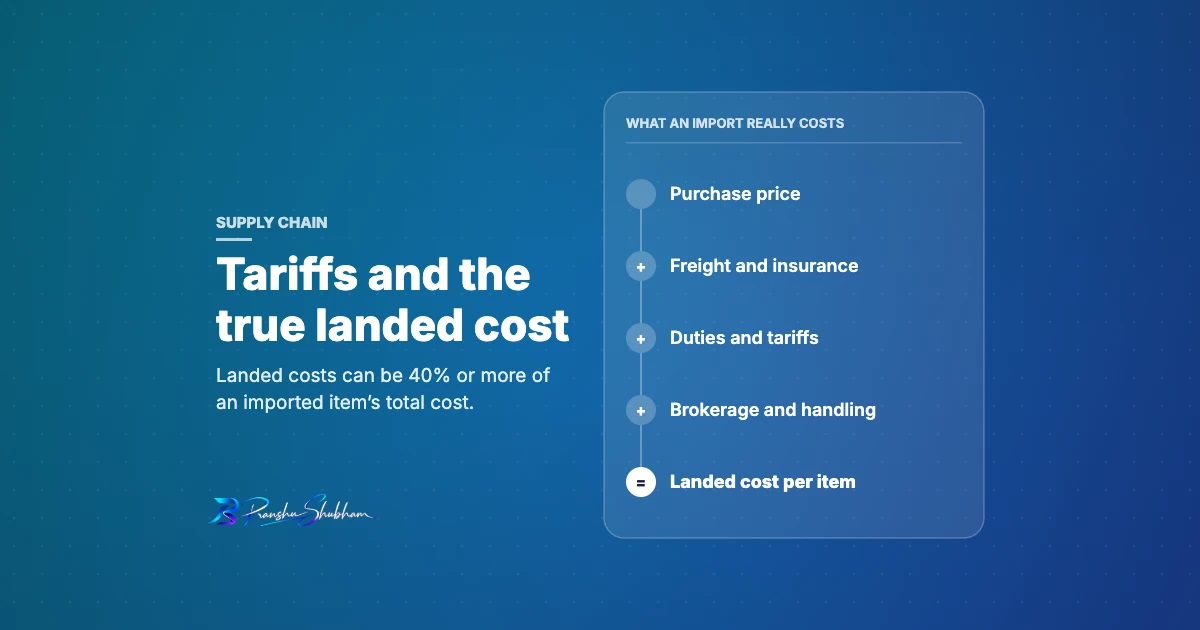
If you import goods, the purchase price on the vendor's invoice is only the start. Freight, insurance, duties, brokerage and handling all land on top. According to Microsoft Learn, for imported goods, landed costs can account for 40 percent or more of the total cost of each imported item.
In 2025 and 2026, the biggest of those add-ons became much harder to predict. The Yale Budget Lab estimated in April 2026 that the US average effective tariff rate stood at 11.8%, the highest since the early 1940s, excluding 2025.
How tariffs are reshaping supply chains
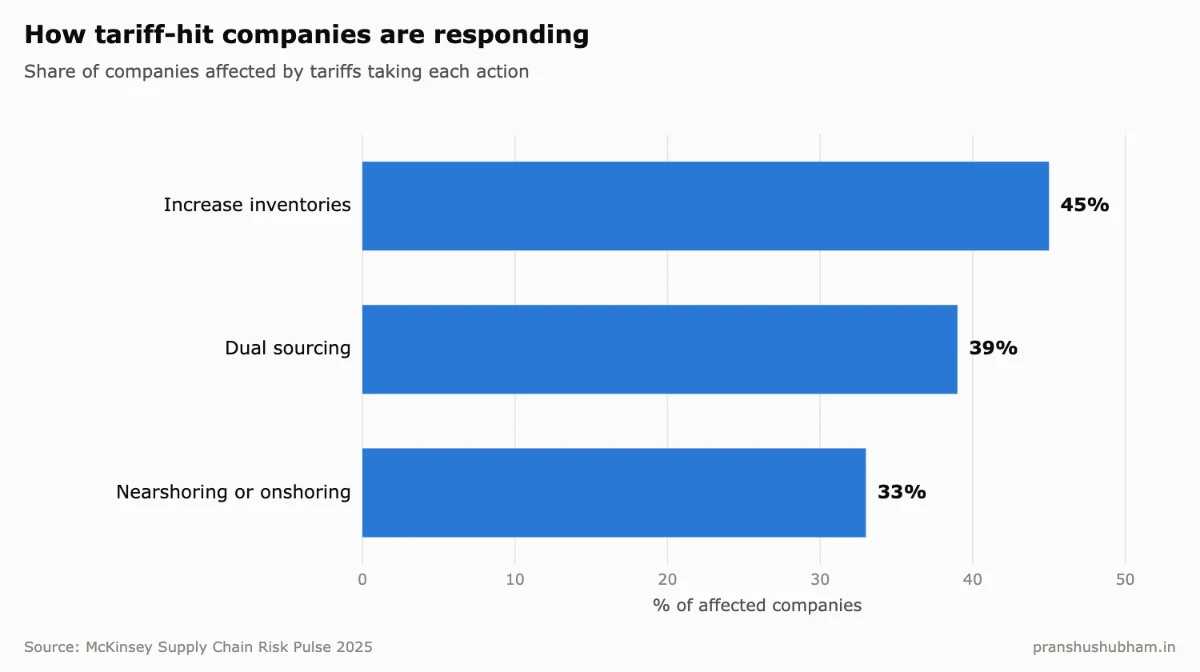
McKinsey's 2025 Supply Chain Risk Pulse found that 82% of companies say their supply chains are affected by new tariffs. Among those affected:
- 45% are increasing inventories
- 39% are pursuing dual sourcing
- 33% are nearshoring or onshoring
McKinsey also found that companies passed on only 45% of tariff costs to customers on average, so the rest is eating into margin. And only 42% have visibility into suppliers at tier two or beyond.
In Asia Pacific, Deloitte's 2026 tariff survey found that 41% of companies would consider significant supply chain realignment even when cost increases are below 20%.
Every one of those decisions, whether to stock up, switch supplier or move production, depends on knowing the true landed cost of each item. Standard cost alone won't tell you that.
Case study: Hampton Products moves beyond standard cost
Hampton Products International, a US maker of security hardware and cargo management products, sources many products from Asia. It was running an ageing Dynamics AX 2008 and, according to Microsoft's published story, needed to "move beyond standard costing methods" and "account for true landed costs."
Hampton moved to Dynamics 365 Supply Chain Management and Finance, with partners Argano and Real Dynamics. It now uses the landed cost capability to forecast international supplier product and transportation costs. On the warehouse side, it optimized picking to deliver record pick and ship numbers within 90 days of go-live.
How landed cost works in Dynamics 365
The Landed cost module in D365 Supply Chain Management tracks imported goods from the supplier to your warehouse:
- Voyages group purchase orders or transfer orders into a shipment, with containers and folios
- Cost types cover freight, insurance, duty, brokerage and other charges, either estimated up front or added as invoices arrive
- Auto costs apply standard charges automatically, such as a duty percentage by item or a freight rate per container
- Apportionment spreads each charge across items by value, quantity, weight or volume
- Over/under accounting posts the difference when actual costs differ from estimates
- Tracking shows where each container is in its journey
The result is a cost per item that includes what it really took to get it on your shelf.
Five steps to tariff-ready costing
- Model duty as its own cost type, not hidden in freight, so you can see tariff impact separately.
- Estimate before you buy. Use auto costs to estimate landed cost on the purchase order, not just after receipt.
- Keep country of origin and HS codes clean on every product. Tariffs change by origin.
- Review margins by item and channel with landed cost included. That's where you'll find which products can't absorb a tariff.
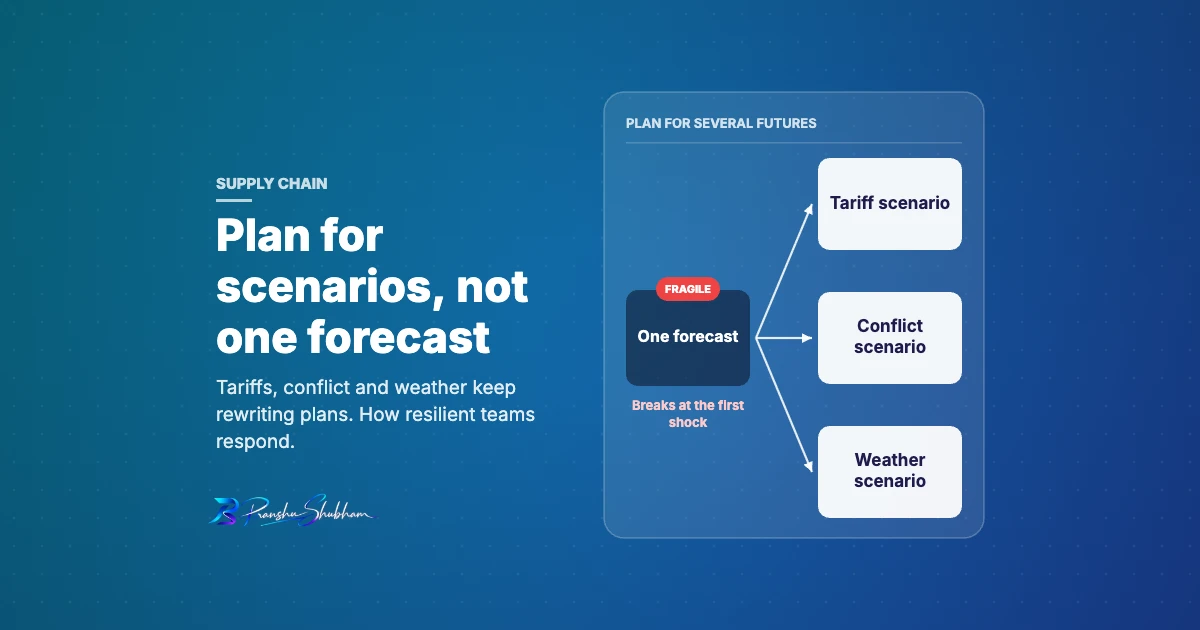
- Run scenarios. Compare the landed cost of the same item from two origins before you shift sourcing.
Frequently asked questions
What is landed cost in Dynamics 365? It's the total cost of getting an imported item into stock: purchase price plus freight, insurance, duties and other charges. The Landed cost module calculates it and spreads each charge across the items in a shipment.
Can Dynamics 365 handle tariff changes? Duty can be modeled as a cost type with automatic charges by item, so updating rates and estimating their impact on purchase orders is a configuration task, not a custom build.
The takeaway
Tariffs turned landed cost from an accounting detail into a strategic number. If your ERP still values imports at standard cost, it's time to see what your products really cost.
I'm Pranshu Shubham, a D365 F&O Solution Architect with deep supply chain experience. If you want true landed cost in your D365 environment, get in touch.
Keep learning on this site
- Landed cost in Dynamics 365 SCM (video lesson)
- Procure-to-pay in Dynamics 365: design, configure, control (free e-book)
- Supply chain resilience in the tariff era
- Dynamics 365 Supply Chain Management Deep Dive (course)